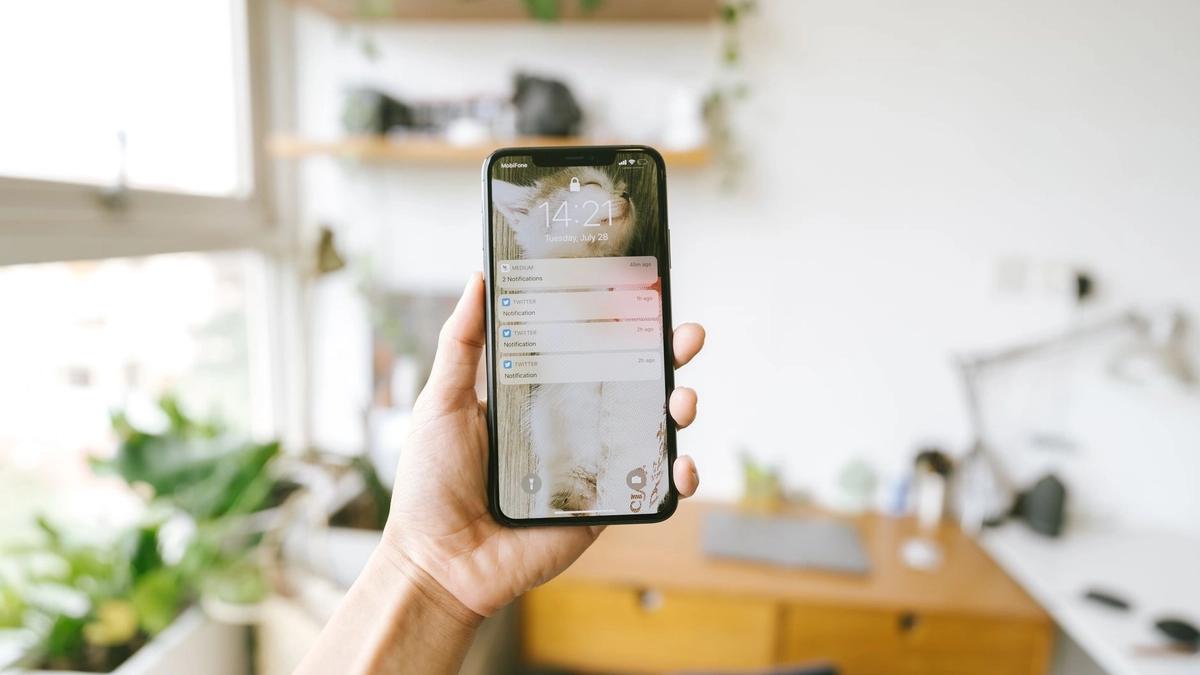
SMS is routinely described as a legacy channel. For a significant class of business messages in Nigeria, it remains the most reliable option available, and the distinction is worth setting out precisely rather than assuming.
Consider the conditions under which a one-time password has to arrive. The recipient may have exhausted their data bundle. They may be using a handset that does not run your application. They may be on a network experiencing congestion. The code must reach them within seconds, and the transaction fails if it does not.
SMS operates under all of those conditions. It requires no data connection, no installed application, no account and no prior relationship. That is not nostalgia for an older technology; it is a description of its delivery characteristics.
What Nigerian businesses actually send
In practice the list is short, and almost entirely transactional rather than promotional.
One-time passwords. The largest category by volume, and the one where failure is most costly. A code that does not arrive is not an inconvenience; it is a customer who cannot complete a transaction, and who may not attempt it again.
Payment confirmations. The message that prevents a customer telephoning support to establish whether a transfer has been received. Each confirmation sent removes a call from the support queue.
Delivery notifications. Dispatched, out for delivery, delivered. The same principle applies: each notification displaces an enquiry.
Statements and payment reminders. Schools, cooperatives, lenders and service businesses whose cash flow depends on customers remembering an obligation.
Promotional broadcasts are conspicuously absent from that list. They are what gave bulk SMS its reputation, and they are not the use that justifies the channel for most businesses.
The limits, stated plainly
Understanding what SMS cannot do is what allows it to be used well.
It does not carry your identity reliably. A sender ID is a short alphanumeric string, and it can be imitated. This is the mechanism behind a substantial proportion of financial phishing in the region, and it means SMS is not the appropriate channel for a message whose credibility depends on the recipient being certain of the sender.
It does not confirm that a message was read. A delivery receipt establishes that the message reached the handset, not that anyone looked at it.
It does not support a conversation. A reply to a shortcode generally reaches no one.
Those limits define where other channels belong. WhatsApp Business provides a verified sender the recipient recognises, a message they can reply to, read receipts, and the ability to attach a document. Email remains appropriate where a formal record or attachment is required.
The practical answer is almost never a single channel. It is SMS for messages that must arrive on any handset under any conditions, WhatsApp where the exchange benefits from being a conversation, and email where a document is involved.
What to evaluate in a provider
A single commercial relationship. The alternative is negotiating separately with each mobile network operator and reconciling several invoices against several delivery reports. An aggregator consolidates this into one account.
Per-message delivery status. Not an aggregate figure on a dashboard, but a status against each message. When a customer disputes whether they were notified, the difference between a record and a recollection is material.
A documented API and a test environment. It should be possible to send a first test message from your own system within an afternoon, without a commercial conversation preceding it.
Defined failure behaviour. What occurs when a number is invalid, when a network is unavailable during a month-end peak, and whether a retry is idempotent or risks charging twice. These questions rarely arise during evaluation and invariably arise in the second week of operation.
Where the difficulty actually lies
The API itself is straightforward. The engineering effort is in the operational questions: what becomes of a failed message, who is informed, whether retries are safe, and how the system behaves during an outage that coincides with peak volume.
For that reason we scope integration work per project rather than offering it as a self-service plan. Where the requirement is genuinely a dashboard and a message template, we say so, and sending can begin the same day.
Sender IDs and registration
An alphanumeric sender ID is what the recipient sees in place of a number, and in Nigeria it generally has to be registered before use rather than simply chosen.
Two practical consequences follow. Registration takes time, so it should be initiated before the launch date depends on it. And the identifier should be chosen for recognition rather than for completeness: a recipient reading a one-time password on a locked screen is matching a short string against what they expect, and an abbreviation they do not recognise does not help them.
Where a message prompts the recipient to act, the sender ID is the only identifying element they can see. That is the limit of what SMS can establish about identity, and it is the reason a message asking for credentials should not be sent by SMS at all.
Estimating volume and cost
Costs are quoted per message and vary by destination network, so a meaningful estimate requires an estimate of volume by category.
One-time passwords are the most predictable: roughly one per login attempt, with a retry rate that should be measured rather than assumed. Transactional confirmations follow transaction volume. Reminders follow the size of the list and the frequency of the cycle.
Two figures are worth establishing before committing to a provider. The first is the retry rate, because retries are messages and they are charged. The second is the proportion of failures attributable to invalid numbers, because that is a data quality problem rather than a delivery problem, and no provider will resolve it on your behalf.
Regulatory considerations
Messaging to customers in Nigeria engages data protection obligations, and consent for marketing messages is treated differently from transactional messages necessary to a service the customer has requested.
The distinction matters operationally, because it determines what a given list may be used for. A number collected to deliver one-time passwords has not thereby been collected for promotional messaging. Where both are intended, the consent should be obtained and recorded separately, and the system should be able to demonstrate which applies.